Jos de Mul

Always look at the website of life

  •  
  •  
  •  
  •  
  •  
  •  
The sovereign debt crisis or Sophie’s choice. On European tragedies, guilt and responsibility

The sovereign debt crisis or Sophie’s choice. On European tragedies, guilt and responsibility

Liesbeth Noordegraaf-Eelens and Jos de Mul, The sovereign debt crisis or Sophie’s choice. On European tragedies, guilt and responsibility. Heinrich Böll Stiftung. European Union. December…

More...
Horizons of Hermeneutics

Horizons of Hermeneutics

Jos de Mul, Horizons of Hermeneutics: Intercultural Hermeneutics in a Globalizing World.  Frontiers of Philosophy in China. Vol. 6, No. 4 (2011), 628-655.   DOI: 10.1007/s11466-011-0159-x (DOI)…

More...
Performance at the NextNature PowerShow

Performance at the NextNature PowerShow

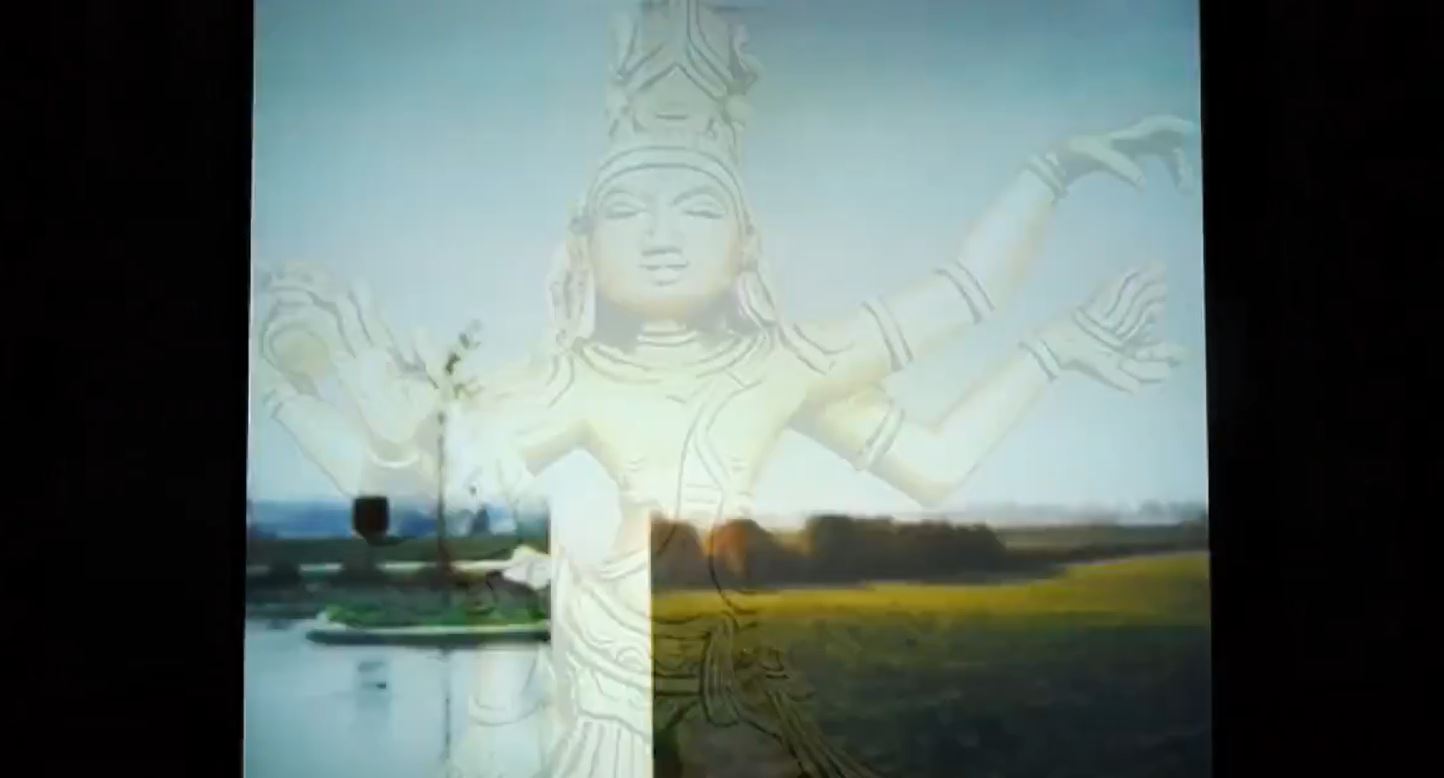
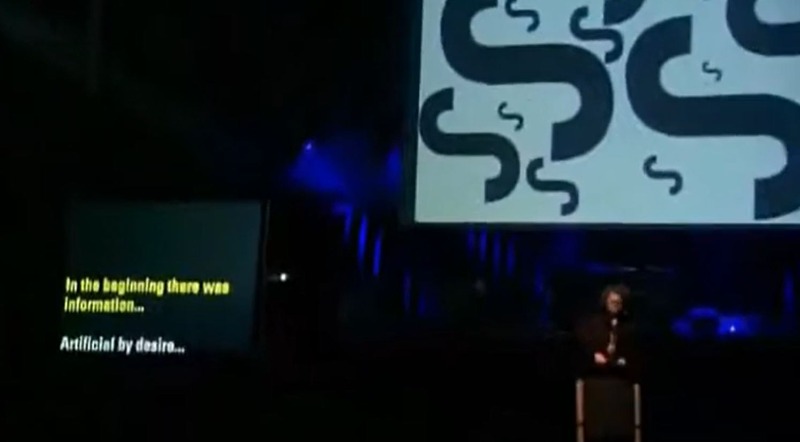
Performing God's Browser: the Biotechnological Sublime, together with media artist Geert Mul at the NextNature Powershow in the Stadschouwburg Amsterdam, Amsterdam, November 5, 2011. More pictures…

More...
The sovereign debt crisis or Sophie’s choice. On European tragedies, guilt and responsibility

The sovereign debt crisis or Sophie’s choice. On European tragedies, guilt and responsibility

Liesbeth Noordegraaf-Eelens and Jos de Mul, The sovereign debt crisis or Sophie’s choice. On European tragedies, guilt and responsibility. Heinrich Böll Stiftung. European Union. December…

More...
Frontpage Slideshow | Copyright © 2006-2011 JoomlaWorks Ltd.
Today's specials
Thursday, 08 March 2012 11:44

Tragedy and repetition

Tragedy and repetition. XPONIKA AIΣΘHTIKHΣ / Annales d'esthetique / Annals for Aesthetics, Vol.46. Volume B (2011), 191-202.

Abstract  According to writers such as Nietzsche, Steiner, and Oudemans and Lardinois the tragic culture of the Greeks has become entirely alien to us. They argue that within the Christian and modern worldview there is no place for tragedy anymore. In this article it is claimed that this does not entail in any shape or form that tragic events cannot take place anymore within Christian and modern culture. In modern culture this particularly happens, with no lack of tragic irony, precisely in the domain in which we believed tragedy had been eliminated: (our interaction with) technology.

Although technological tragedies differ in many respects from classical tragedies, they also show deep continuities. Just as in the case of their classical models, the behavior of the tragic heroes of our time is characterized by miscalculation (hamartia), blindness (atè) with regard to the tragic reality and foolhardiness (hybris).Now, tragic events do not automatically raise tragic awareness. Tragedies are characterized by the fact that the tragic heroes – unlike the spectators – are unaware of the fate that is befalling them, and coming about because of them. But most tragedies also have a reversal of circumstances (peripéteia), a moment at which hopeful expectation crumbles and the hero suddenly becomes aware of his tragic position. Postmodernity is another way of saying that modern culture recognizes itself as tragic.

"In an era of heightened existential vulnerability and awareness of finitude there is a correspondingly heightened need for new contexts of human understanding. Here we owe an enormous debt of gratitude to de Mul for providing us with a superb explication of the thought of Wilhelm Dilthey, whose precocious insights into the finitude and historical contingency of human understanding promise to contribute immeasurably to the widening of its horizons."

Robert D. Stolorow, Human Studies. A Journal for Philosophy and the Social Sciences (2012) Read entire review

Also see The Tragedy of Finitude

Published in Publications
Liesbeth Noordegraaf-Eelens and Jos de Mul, The sovereign debt crisis or Sophie’s choice. On European tragedies, guilt and responsibility. Heinrich Böll Stiftung. European Union. December 21, 2011. http://www.boell.eu/

Does it matter at all?

oedipusTBAThe year 2011 will probably be known for its quick succession of Euro summits. They all had a similar, tragic outline. Every summit started with good intentions: this would be the summit bringing the solution for the crisis. As a result, expectations ran sky high and financial markets lifted. As the summit came closer, expectations were moderated, ballyhooing tempered, rumors about failures spread, and possible solutions were put into doubt. During – or just before – the summit, it became clear that although some solution was to be expected, it definitely would not be the solution. For a moment markets had seemed relieved after the summits, but within a few days pessimism took over. Instead of restoring confidence the summit had further weakened it: once again it became clear that this was not the final solution; once again a new summit would be needed. Just as in Greek tragedy, every next step seems to bring us closer to the final catastrophe.

Published in Online publications
Jos de Mul. 后)现代艺术与哲学中的浪漫之欲。Chinese translation of Romantic Desire in (Post)Modern Art and Philosophy. Wuhan: Wuhan University Press, 2010, 306p.

ISBN 978-7-307-08019-5
RMB 42.00

An erudite and wide-ranging discussion of postmodernism and romanticism in twentieth-century art and philosophy.

In this erudite and wide-ranging discussion of postmodernism and romanticism in twentieth-century art and philosophy, Jos de Mul sheds a fascinating light on the ambivalent character of our present culture, which oscillates between modern enthusiasm and postmodern irony. Along the way, he engages the work of such thinkers as Nietzsche, Freud, Heidegger, Habermas, Lacan, Barthes, and Derrida; visual artists Magritte and Stella; poets George and Coleridge; and composers Schonberg, Cage, and Reich, among others, providing a sort of intellectual history of Romantic, Modernist, and Postmodernist "tempers."

Click on 'Read more' for reviews, rating and social media.


Published in Books
Monday, 21 November 2011 10:36

The biotechnological sublime

Jos de Mul. The biotechnological sublime. In: Ken-ichi Sasaki (ed.), Aesthetics beyond Art. Special issue of Diogenes. to be published in 2012.

Abstract  The notion of the sublime, which since the nineteenth century is one of the dominant aesthetic categories, is strongly connected with (the artistic representation of) overwhelming nature. In this article it is argued that in the course of the 20th century the sublime increasingly becomes entangled with the experience of technology. However, in the age of biotechnologies, such as genetic modification and synthetic biology, the sublime regains a natural dimension. Taking Eduard Kac’s Alba fluo rabbit (a ‘transgenic’ bunny, that resulted from the injection of green fluorescent protein of a Pacific jellyfish into the egg of an Albino rabbit) as an example, it will be argued that in the age of biotechnology the difference between nature, technology and art will gradually vanish, and new dimensions of the sublime will become manifest.


Thursday, 10 November 2011 17:10

Performance at the NextNature PowerShow

2011-11-05JosInStadsschouwburgAdam 250_x_188

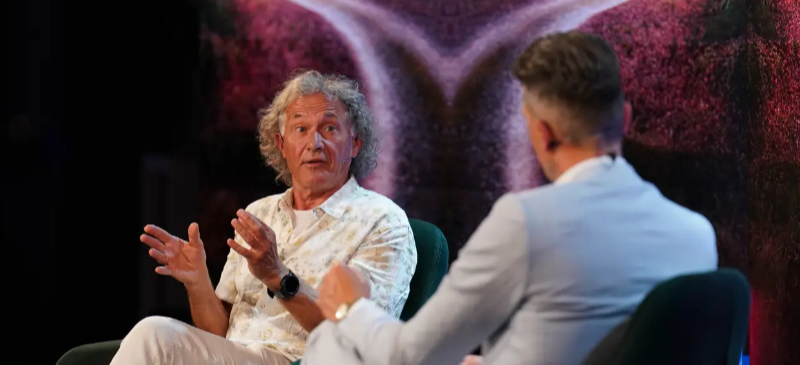
Performing God's Browser: the Biotechnological Sublime, together with media artist Geert Mul at the NextNature Powershow in the Stadschouwburg Amsterdam, Amsterdam, November 5, 2011.

More pictures of the NextNature Powershow .

Report of Max Bruin.

Read more about the NextNature Powershow on the websiteof the NextNature Net.

Published in News
Wednesday, 22 February 2012 12:07

Le sublime (bio)technologique.

Jos de Mul. Le sublime (bio)technologique. Diogène. No.233-234 (2011), 25-37.
Jos de Mul. Cyberspace Odyssey. Towards a Virtual Ontology and Anthropology. Castle upon Tyne: Cambridge Scholars Publishing, 2010, 334 p.

Translation of Cyberspace Odyssee, Kampen: Klement, 2002 (Dutch)
ISBN (10) 1-4438-2127-6, ISBN (13) 978-1-4438-2127-8  
₤ 44.99 (Order); US $: 67.99 (Order)

The emergence of the hominids, more than five million years ago, marked the start of the human odyssey through space and time. This book deals with the last stage of this fascinating journey: the exploration of cyberspace and cybertime. Through the rapid global implementation of information and communication technologies, a new realm for human experience and imagination has been disclosed. Reversely, these postgeographical and posthistorical technologies have started to colonize our bodies and minds. Taking Homer’s Odyssey and Kubrick’s 2001: A Space Odyssey as his starting point, the author investigates the ‘informatization of the worldview’, focusing on its implications for our culture–arts, religion, and science–and, ultimately, our form of life.

Moving across a wide range of disciplines, varying from philosophical anthropology and palaeontology to information theory, and from astrophysics to literary, film and new media studies, the author discusses our ‘cyberspace odyssey’ from a reflective position beyond euphoria and nostalgia. His analysis is as profound as nuanced and deals with issues that will be high on the agenda for many decades to come.

In 2003 a Dutch Edition of Cyberspace Odyssey received the Socrates Prize for the best philosophy book published in Dutch.

Published in Books
Jos de Mul. Romantic Desire in (Post)Modern Art and Philosophy. Albany: State University of New York Press, 1999, 316 p.

Translation of Het romantische verlangen in (post)moderne kunst en filosofie, Rotterdam: Rotterdamse Filosofische Studies (Dutch)
ISBN 0-7914-4217-9 (hard cover)
ISBN 0-7914-4218-7 (paperback)
US $ 55.38 (Order hard cover ); US $: 16.00 (Order paperback )


An erudite and wide-ranging discussion of postmodernism and romanticism in twentieth-century art and philosophy.


In this erudite and wide-ranging discussion of postmodernism and romanticism in twentieth-century art and philosophy, Jos de Mul sheds a fascinating light on the ambivalent character of our present culture, which oscillates between modern enthusiasm and postmodern irony. Along the way, he engages the work of such thinkers as Nietzsche, Freud, Heidegger, Habermas, Lacan, Barthes, and Derrida; visual artists Magritte and Stella; poets George and Coleridge; and composers Schonberg, Cage, and Reich, among others, providing a sort of intellectual history of Romantic, Modernist, and Postmodernist "tempers."


Click on 'Read more' for reviews, rating and social media.

Published in Books
Wednesday, 02 November 2011 10:52

Database aesthetics

The psychoanalyst Abraham Maslov once remarked that for someone who only has a hammer, everything appears to be a nail. For a globaliz ing culture, in which the computer rapidly has become the main instrument, the world becomes a gigantic database.

      We see this database ontology at work when, for example, information technology is deployed in the field of genetic manipulation. The gene pool of life on earth is then no longer primarily conceived as a contingent and factual evolutionary constellation, but rather as a database of an infinite number of virtual life forms that can be actualized at will. In other words, the artistic collage has become a reality-creating tech nology. Biologists use computer programs that can simulate alternative evolutions in order to create specific alternatives to reality. Not only can past life forms be revitalized by in formation-technological manipulation but by contingent or intended mutations; even future possibilities become objects of manipulation (a specific form of what Anthony Giddens calls ‘the colonization of the future’). Although not yet as in as spectacular a way as in Spielberg’s Jurassic Park or in sci ence fiction films such as Robocop, our world is increasingly populated with new, transgenetic life forms (and thus with new forms of post-natural beauty and ugliness), created with the aid of informational bio-technologies.

     What applies to physical and biological reality also applies to social and cultural reality, rich domains for the database ontology. We no longer follow, as pre-modern people did, certain habits, customs and norms because there are no other alternatives (known); nor do we, as modern people did, deliberately choose certain options out of a deep conviction. Instead, these cultural genes (called “memes” by Richards Dawkins), are more or less randomly taken from the “meme pool” of the various increasingly globalizing cultures on earth.

ArtSalad

Published in Blogs

Brief CV Jos de Mul

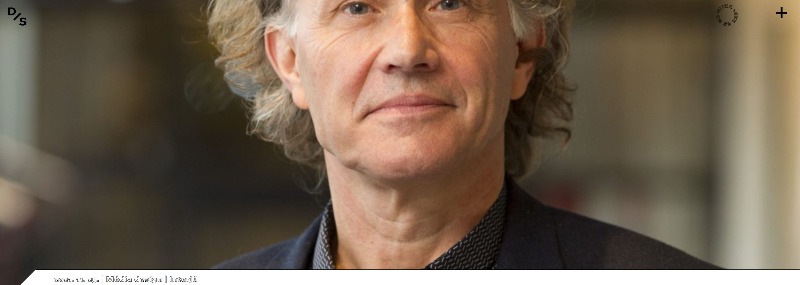
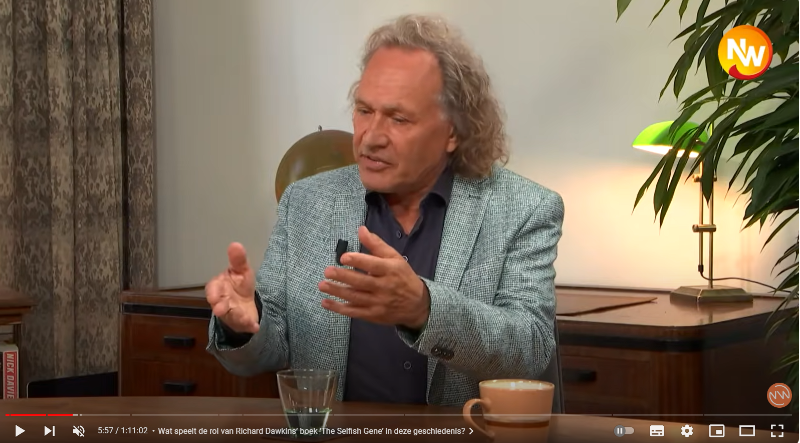
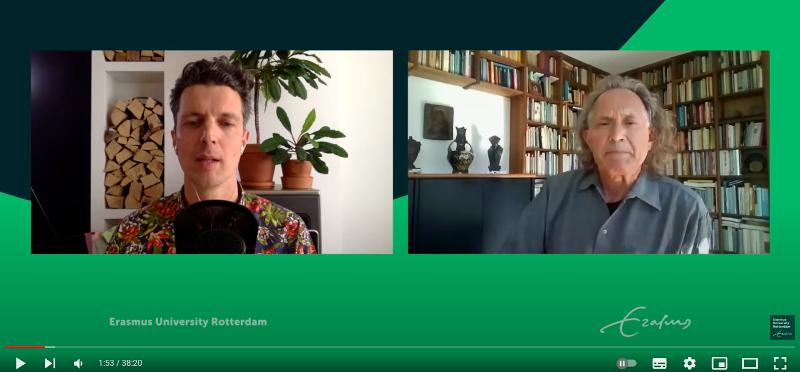
(Prof.dr.) Jos de Mul is full professor Philosophy of Man and Culture at the Faculty of Philosophy, Erasmus University Rotterdam, and scientific director of the Research Institute Philosophy of Information and Communication Technology (φICT). He has also taught at the University of Michigan (Ann Arbor) and Fudan University (Shanghai). From 2007-2010 he was president of the International Association for Aesthetics. His publications include: Romantic Desire in (Post)Modern Art and Philosophy (State University of New York Press, 1999) , The Tragedy of Finitude. Dilthey's Hermeneutics of Life (Yale University Press, 2004), Cyberspace Odyssey (Cambridge Scholars Publishing, 2010).  He is the winner of the Praemium Erasmianum Research Prize and the Socrates Prize. His work has been translated in more than a dozen languages.