Jos de Mul

Always look at the website of life

The sovereign debt crisis or Sophie’s choice. On European tragedies, guilt and responsibility

The sovereign debt crisis or Sophie’s choice. On European tragedies, guilt and responsibility

Liesbeth Noordegraaf-Eelens and Jos de Mul, The sovereign debt crisis or Sophie’s choice. On European tragedies, guilt and responsibility. Heinrich Böll Stiftung. European Union. December…

More...
PedoBot® is niet boos, maar wel verdrietig (en soms opgewonden)

PedoBot® is niet boos, maar wel verdrietig (en soms opgewonden)

Jos de Mul. PedoBot® is niet boos, maar wel verdrietig (en soms opgewonden). Over intelligente robots, emoties en sociale interactie. In J.B. de Jong (red.),…

More...
Horizons of Hermeneutics

Horizons of Hermeneutics

Jos de Mul. Horizons of Hermeneutics: Intercultural Hermeneutics in a Globalizing World.  Frontiers of Philosophy in China. Vol. 6, No. 4 (2011), 628-655. DOI: 10.1007/s11466-011-0159-x (DOI) 10.1007/s11466-011-0159-x…

More...
Paniek in de polder. Polytiek en populisme in Nederland

Paniek in de polder. Polytiek en populisme in Nederland

Jos de Mul. Paniek in de polder. Polytiek en populisme in Nederland. Zoetermeer: Uitgeverij Klement, 2011 (2de, herziene druk), 204 p. 1de druk 2011ISBN: 978 90 8687…

More...
Performance op de NextNature PowerShow

Performance op de NextNature PowerShow

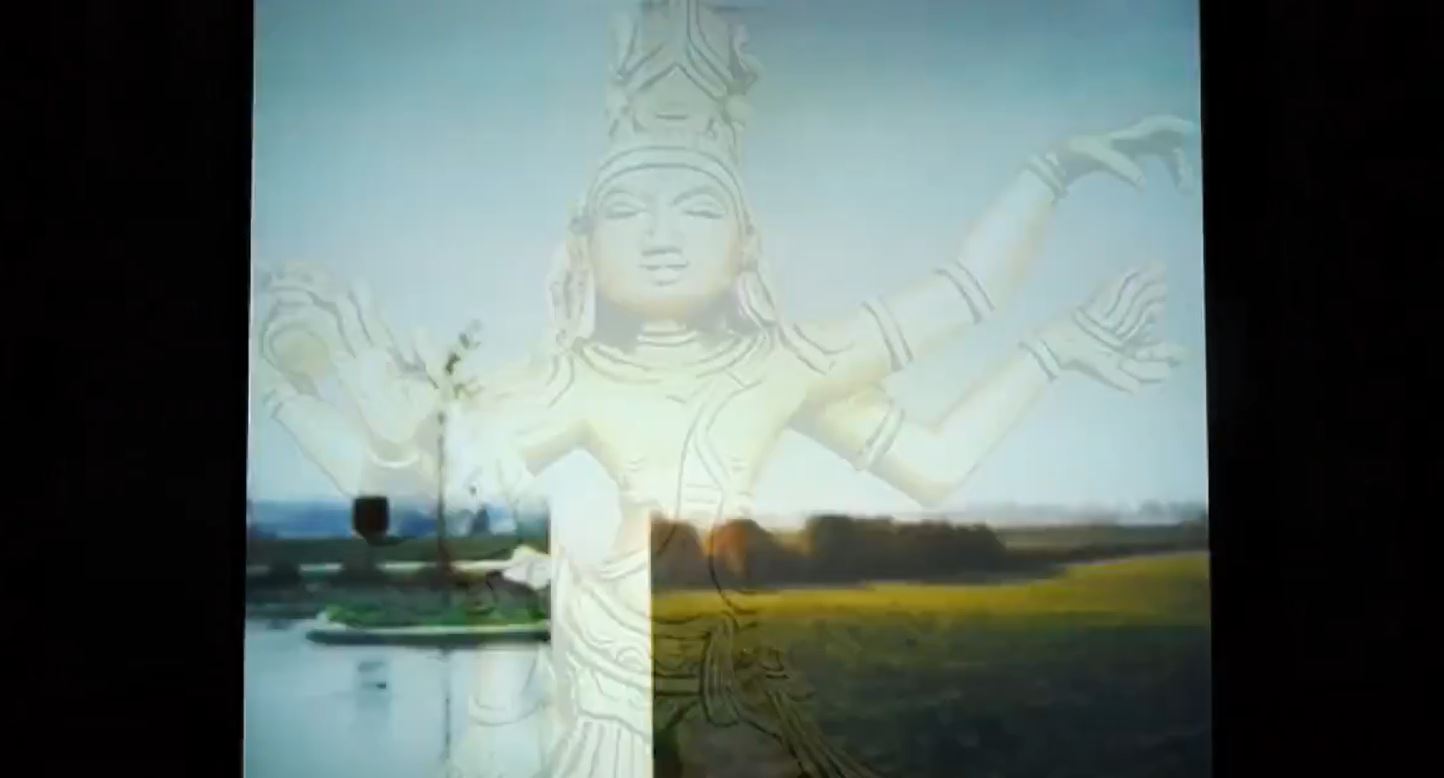
Aan het werk tijdens God's Browser: the Biotechnological Sublime, een performance die ik samen met videokunstenaar Geert Mul gaf tijdens de NextNature Powershow in de…

More...
Beste Geert!

Beste Geert!

Open brief aan Geert Wilders. Voorgelezen bij de presentatie van het boek Paniek in de polder. Polytiek en populisme in Nederland. Rotterdam, Boekhandel Donner (Lijnbaan),…

More...
The sovereign debt crisis or Sophie’s choice. On European tragedies, guilt and responsibility

The sovereign debt crisis or Sophie’s choice. On European tragedies, guilt and responsibility

Liesbeth Noordegraaf-Eelens and Jos de Mul, The sovereign debt crisis or Sophie’s choice. On European tragedies, guilt and responsibility. Heinrich Böll Stiftung. European Union. December…

More...
Frontpage Slideshow | Copyright © 2006-2011 JoomlaWorks Ltd.

Agenda

Actueel
Jos de Mul. Multitasking. Keynote lecture at the International Conference on New Millennium Learners (OECD / Flemish Ministry of Education and Training). Brussels, September 22, 2009.

On the grand scale of worldwide changes that have occurred throughout the twentieth century the introduction and domestication of a range of new media is an important phenomenon. Telephone, radio, film, gramophone, television, walkman, audio and video recorders – all of these devices have come to be mundane elements of our everyday lifeworld. The advent of the personal computer can be labeled a new chapter in this history. The modern-day computer is an interactive multi-medium (also called a hyper-medium), which can simulate and merge each of the media mentioned before.

Nowadays, when we are on holiday we can call home from an internet café using Skype, simultaneously send a few digital holiday pictures, pass on some links with information on our holiday destination using the inbuilt chat box, and show in real-time the tan we’ve acquired via the web cam. All of this is aided by the fact that most personal computers and notebooks are now connected to the internet. Moreover, due to ongoing miniaturization the internet’s nodes become ever more mobile. Many vacationers don’t even have to go to an internet café anymore, since they can do all of the aforementioned things via their mobile phones or personal digital assistants (PDAs).

The development of mobile hypermedia has important social consequences. These days, users are connected to one another 24 hours a day. Now, a sense of sober-mindedness is never a bad thing in the world of new media. When we look at the data, for instance as regularly presented by the Dutch Social and Cultural Planning Bureau (the SCP), then on the surface things don’t appear to be all that bad in the Netherlands, compared to a country such as the United States – which always shows what’s in store for us, too. According to the SCP Dutch citizens spend an average of almost three hours on media use, which is slightly less than one third of their free time. Moreover, this number has stayed the almost same since 1975.

Gepubliceerd in

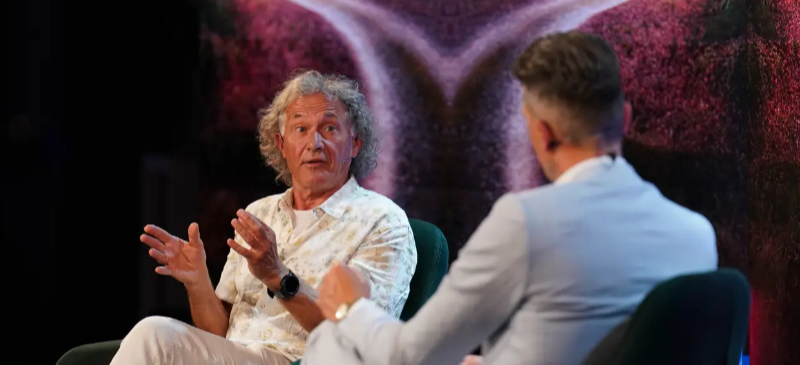
Op 18 november j.l. gaf Jos de Mul bij Toneelgroep De Appel een korte lezing over de betekenis van de Griekse mythologie voor onze tijd en trad hij vervolgens in discussie met regisseur Aus sr Greidanus, schrijver Jules Terlingen en dramaturg Alain Pringels. Dit alles naar aanleiding van de toneelmarathon Herakles. Een schriftelijk verslag van de bijeenkomst en een is te vinden op de website Alphaville van De Appel. Zondag 26 februari gaat de (inclusief pauzes) elf uur durende voorstelling in première.


Gepubliceerd in

"In an era of heightened existential vulnerability and awareness of finitude there is a correspondingly heightened need for new contexts of human understanding. Here we owe an enormous debt of gratitude to de Mul for providing us with a superb explication of the thought of Wilhelm Dilthey, whose precocious insights into the finitude and historical contingency of human understanding promise to contribute immeasurably to the widening of its horizons."

Robert D. Stolorow, Human Studies. A Journal for Philosophy and the Social Sciences (2012) Read entire review


Zie ook The Tragedy of Finitude

Gepubliceerd in
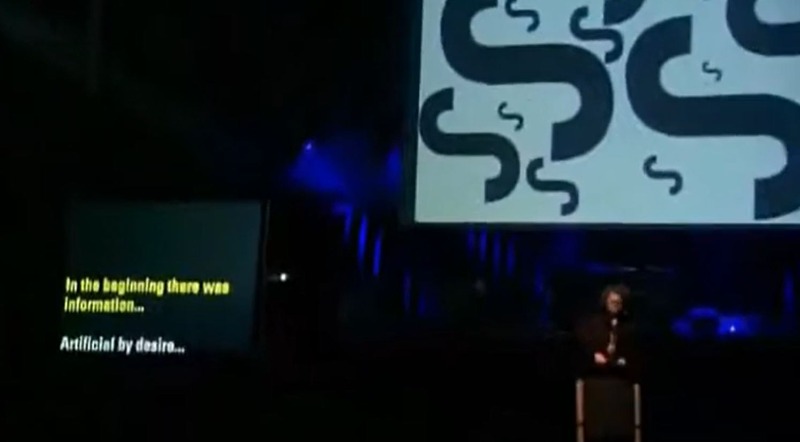
Liesbeth Noordegraaf-Eelens and Jos de Mul, The sovereign debt crisis or Sophie’s choice. On European tragedies, guilt and responsibility. Heinrich Böll Stiftung. European Union. December 21, 2011. http://www.boell.eu/

Does it matter at all?

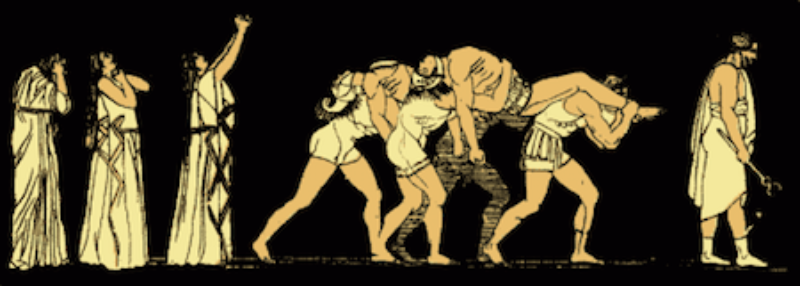
oedipusTBAThe year 2011 will probably be known for its quick succession of Euro summits. They all had a similar, tragic outline. Every summit started with good intentions: this would be the summit bringing the solution for the crisis. As a result, expectations ran sky high and financial markets lifted. As the summit came closer, expectations were moderated, ballyhooing tempered, rumors about failures spread, and possible solutions were put into doubt. During – or just before – the summit, it became clear that although some solution was to be expected, it definitely would not be the solution. For a moment markets had seemed relieved after the summits, but within a few days pessimism took over. Instead of restoring confidence the summit had further weakened it: once again it became clear that this was not the final solution; once again a new summit would be needed. Just as in Greek tragedy, every next step seems to bring us closer to the final catastrophe.

Gepubliceerd in
Jos de Mul. 后)现代艺术与哲学中的浪漫之欲。Chinese translation of Romantic Desire in (Post)Modern Art and Philosophy. Wuhan: Wuhan University Press, 2010, 306p.

ISBN 978-7-307-08019-5
RMB 42.00

An erudite and wide-ranging discussion of postmodernism and romanticism in twentieth-century art and philosophy.

In this erudite and wide-ranging discussion of postmodernism and romanticism in twentieth-century art and philosophy, Jos de Mul sheds a fascinating light on the ambivalent character of our present culture, which oscillates between modern enthusiasm and postmodern irony. Along the way, he engages the work of such thinkers as Nietzsche, Freud, Heidegger, Habermas, Lacan, Barthes, and Derrida; visual artists Magritte and Stella; poets George and Coleridge; and composers Schonberg, Cage, and Reich, among others, providing a sort of intellectual history of Romantic, Modernist, and Postmodernist "tempers."

Click on 'Read more' for reviews, rating and social media.

Gepubliceerd in
Jos de Mul. Etiketten plakken op de golven van de zee: Frederik van Eeden als vitalist. Frederik van Eeden-Genootschap. Mededelingen LV. Maart 2011, 6-19.
 

Inleiding

Laat ik mijn voordracht beginnen met het uitspreken van enkele woorden van dank en vrees. Laat ik met de dank beginnen. Het is mij een grote eer vandaag de jaarlijkse rede voor het illustere Frederik van Eeden-Genootschap te mogen uitspreken. Vooral gezien het feit dat we dit jaar, morgen om precies te zijn, de 150ste geboortedag van Frederik van Eeden vieren. Het is mij tevens een groot genoegen, omdat Frederik van Eeden ook een van mijn grote literaire jeugdliefdes is geweest en een belangrijke stempel heeft gedrukt op mijn persoonlijke ontwikkeling gedurende mijn middelbare schooljaren, en die jaren behoren – zeker als het gaat om de artistieke, politieke en filosofische voorkeuren die men ontwikkelt – tot de belangrijkste in een mensenleven.

Gepubliceerd in
zaterdag, 03 december 2011 12:47

Ze begrijpt me!

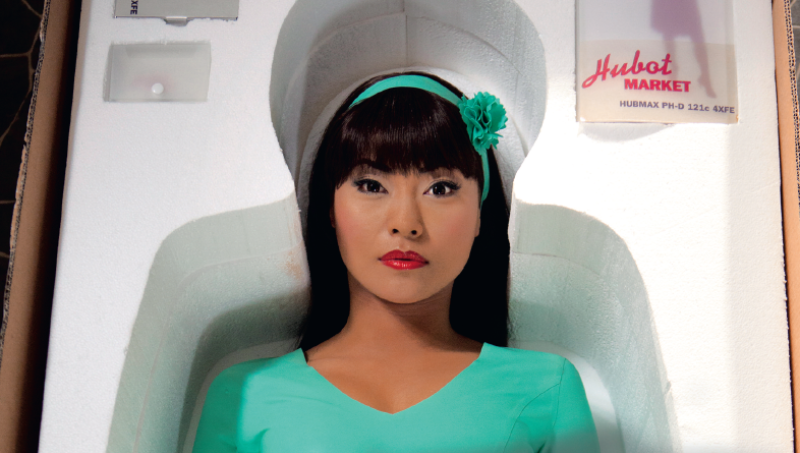
HRP-4C 150_x_173Jos de Mul. Ze begrijpt me. Hoe nieuwe robots ons leven gaan raken. Trouw, 3 december, 2011, Letter en Geest, 1-3.

"Mijn machine maakt mogelijk wat nu nog niet kan", schreef Karel van het Reve in 1983, aan de vooravond van de digitale revolutie.Hoe staan we er anno 2011 voor? De Rotterdamse filosoof Jos de Mul Ziet nu al ongekende mogelijkheden voor robots en er kan nog veel meer. Alleen: een machine die mijn gevoelens doorgrondt en van wie ik ga houden, is dat wel wenselijk?

Ze praat, lacht en wandelt, weegt 43 kilo en is 1,58m lang. De Japanse humanoide robot, ontworpen door Kazuhito Yokoi, luistert naar de naam HRP-4C,alias Miim. Afhankelijk van de gebruikte software kan ze ook dansen of zingen:verder functioneert Miim prima als mannequin die op de catwalk bruidskleding showt.

Gepubliceerd in
Jos de Mul. Recensie van Peter-Paul Verbeek, De grens van de mens. Over techniek, ethiek en menselijke natuur. Rotterdam: Lemniscaat, 2011. 144 blz. ISBN 978 90 477 0353 2

Peter-Paul Verbeek - hoogleraar Filosofie van Mens en Techniek aan de Universiteit Twente en voorzitter van De Jonge Academie van de KNAW – is een van de meest productieve vertegenwoordigers van de Nederlandse techniekfilosofie, die ook internationaal de aandacht op zich heeft gevestigd met o.a. het boek What Things Do: Philosophical Reflections on Technology, Agency, and Design en artikelen in tal van vooraanstaande tijdschriften. Onlangs verscheen onder de titel De grens van de mens. Over techniek, ethiek en de menselijke natuur een nieuw Nederlandstalig boek van hem. Verbeek breekt in dit boek, gebaseerd op een aantal eerder verschenen artikelen en zijn oratie uit 2009, op een even scherpzinnige als heldere wijze een lans voor een andere omgang met de vraagstukken waarvoor de technologie ons stelt dan doorgaans gebruikelijk is. Veel ethici leggen zich voornamelijk toe op het trekken van grenzen (‘Tot hier en niet verder!’), waarna de ontwikkelingen doorgaans vrolijk verder gaan en de ethicus opnieuw de hakken schrap zet en de cyclus zich weer herhaalt. In tegenstelling tot die reactieve benadering houdt Peter-Paul Verbeek een enthousiasmerend pleidooi voor een

Gepubliceerd in
Jos de Mul. PedoBot® is niet boos, maar wel verdrietig (en soms opgewonden). Over intelligente robots, emoties en sociale interactie. In J.B. de Jong (red.), Kenniskamer Intelligente Robots, 56-63. Den Haag: Ministerie van Veiligheid en Justitie en Rathenau Instituut, 2011.

Look David, I can see you’re really upset about this. I honestly think you ought to sit down calmly, take a stress pill, and think things over.

HAL

Tot voor kort troffen we robots, behalve in sciencefiction romans en films, vooral aan in de fabriek. De industriële robot is daaruit inmiddels niet meer weg te denken. Schoorvoetend maakt de robot nu echter ook zijn entree in de publieke en private ruimte, waardoor hij als actor gaat deelnemen aan het menselijk verkeer. Daarvoor zijn allerlei nuttige toepassingen te bedenken, maar er zijn ook uiteenlopende gevaren en maatschappelijke en ethische vraagstukken mee verbonden. Indien we de robot op een succesvolle wijze met mensen laten interacteren, dan zullen ze niet alleen intelligent moeten zijn, maar ook goed met emoties om moeten kunnen gaan.

Gepubliceerd in
maandag, 21 november 2011 09:53

The biotechnological sublime

Jos de Mul. The biotechnological sublime. In: Ken-ichi Sasaki (ed.), Aesthetics beyond Art. Special issue of Diogenes. to be published in 2012.

Abstract  The notion of the sublime, which since the nineteenth century is one of the dominant aesthetic categories, is strongly connected with (the artistic representation of) overwhelming nature. In this article it is argued that in the course of the 20th century the sublime increasingly becomes entangled with the experience of technology. However, in the age of biotechnologies, such as genetic modification and synthetic biology, the sublime regains a natural dimension. Taking Eduard Kac’s Alba fluo rabbit (a ‘transgenic’ bunny, that resulted from the injection of green fluorescent protein of a Pacific jellyfish into the egg of an Albino rabbit) as an example, it will be argued that in the age of biotechnology the difference between nature, technology and art will gradually vanish, and new dimensions of the sublime will become manifest.


Gepubliceerd in
Pagina 1 van 2

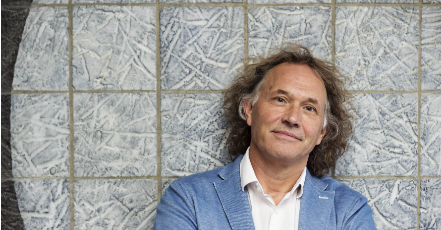
Beknopt CV Jos de Mul

(Prof.dr.) Jos de Mul is hoogleraar Filosofie van mens en cultuur, Faculteit WijsbegeerteErasmus Universiteit Rotterdam, en wetenschappelijk directeur van het onderzoekscentrum Filosofie van de informatie- en communicatietechnologie (φICT). De afgelopen jaren was hij o.a. ook gasthoogleraar aan de University of Michigan (Ann Arbor) en Fudan University (Shanghai). Van 2007 tot 2010 was hij president van de International Association for Aesthetics. Tot zijn Nederlands boekpublicaties behoren o.a. Het romantische verlangen in (post)moderne kunst en filosofie (1990), De tragedie van de eindigheid (1993), Cyberspace Odyssee (2002), De domesticatie van het noodlot. De wedergeboorte van de tragedie uit de geest van de technologie (2006) en Paniek in de polder. Polytiek en populisme in Nederland (2011). Hij is winnaar van de Praemium Erasmianum Onderzoeksprijs (1993) en de Socrates prijs (2003).Zijn werk is in vele talen vertaald.